

.jpg)

Build with BlockHorizon
Get started with BlockHorizon today and unlock the
full power of the Bitcoin Blockchain
full power of the Bitcoin Blockchain
Talk to our team




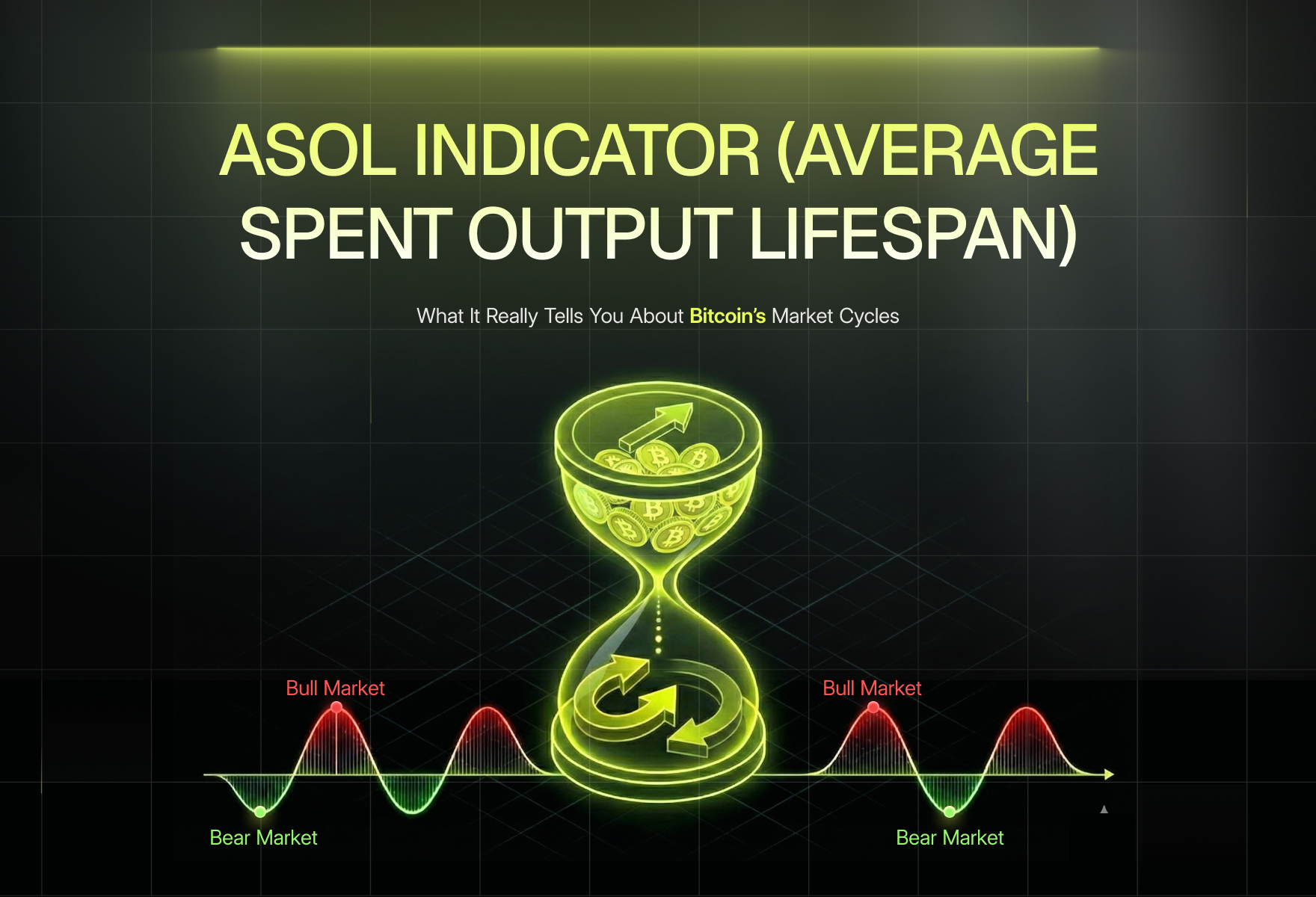
If you’ve ever wondered who is actually moving the Bitcoin market - tourists or veterans - ASOL is one of the fastest ways to find out. Most metrics focus on how much Bitcoin is moving; ASOL focuses on who’s behind the move by measuring the average age of the coins being spent.
In other words:
ASOL tracks whether the market is being driven by short-term traders, or by long-term holders who almost never move coins unless something big is happening.
And if you’ve been in Bitcoin long enough, you already know:
When the old money moves, the story changes.
This guide breaks down ASOL in plain English - what it measures, why it matters, how to interpret its signals, and why analysts treat ASOL spikes like market sirens.
Think of ASOL as a behavioral MRI for Bitcoin.
Price tells you what happened. Volume tells you how much happened. ASOL tells you who did it.
It shows the average age (in days) of coins being spent. When older coins suddenly move, you’re not looking at retail jitters - you’re looking at long-term holders reacting to something meaningful.
ASOL helps analysts understand:
It’s one of the cleanest behavioral indicators in on-chain analysis.
Every Bitcoin UTXO accumulates “age” the longer it sits untouched.
When it moves, that age resets to zero.
ASOL = the average age of all spent outputs in a given period.
It focuses purely on age, not volume, which is crucial. A tiny amount of very old Bitcoin can move ASOL sharply upward.
Key points:
ASOL is less about price and more about psychology.
Short-term holders move coins constantly.
Long-term holders do not.
That’s what makes ASOL so useful: when older coins move, the reason usually matters.
High ASOL readings often show up when:
Low ASOL tends to appear during:
If the Bitcoin market has a heartbeat, ASOL is one of the ways you can feel its pulse.
This metric isn’t complicated - but interpreting it well is an art. Here’s how seasoned analysts use it.
This is one of the most important signals in on-chain analytics. It often indicates:
High ASOL doesn’t always mean “top incoming,” but cycle tops rarely happen without it.
This usually means:
Low ASOL is common during the middle of bear markets and early stages of recovery.
Patterns matter more than single readings:
Every Bitcoin UTXO has a “lifespan” - time since last moved.
ASOL measures the average lifespan of all coins spent during the period, regardless of volume. That makes it uniquely sensitive to movement of old coins.
Example: If 50 BTC of 1-day-old coins move and 1 BTC of 10-year-old coins moves, ASOL will still jump because that ancient coin carries disproportionate weight. This is why analysts treat ASOL spikes with respect.
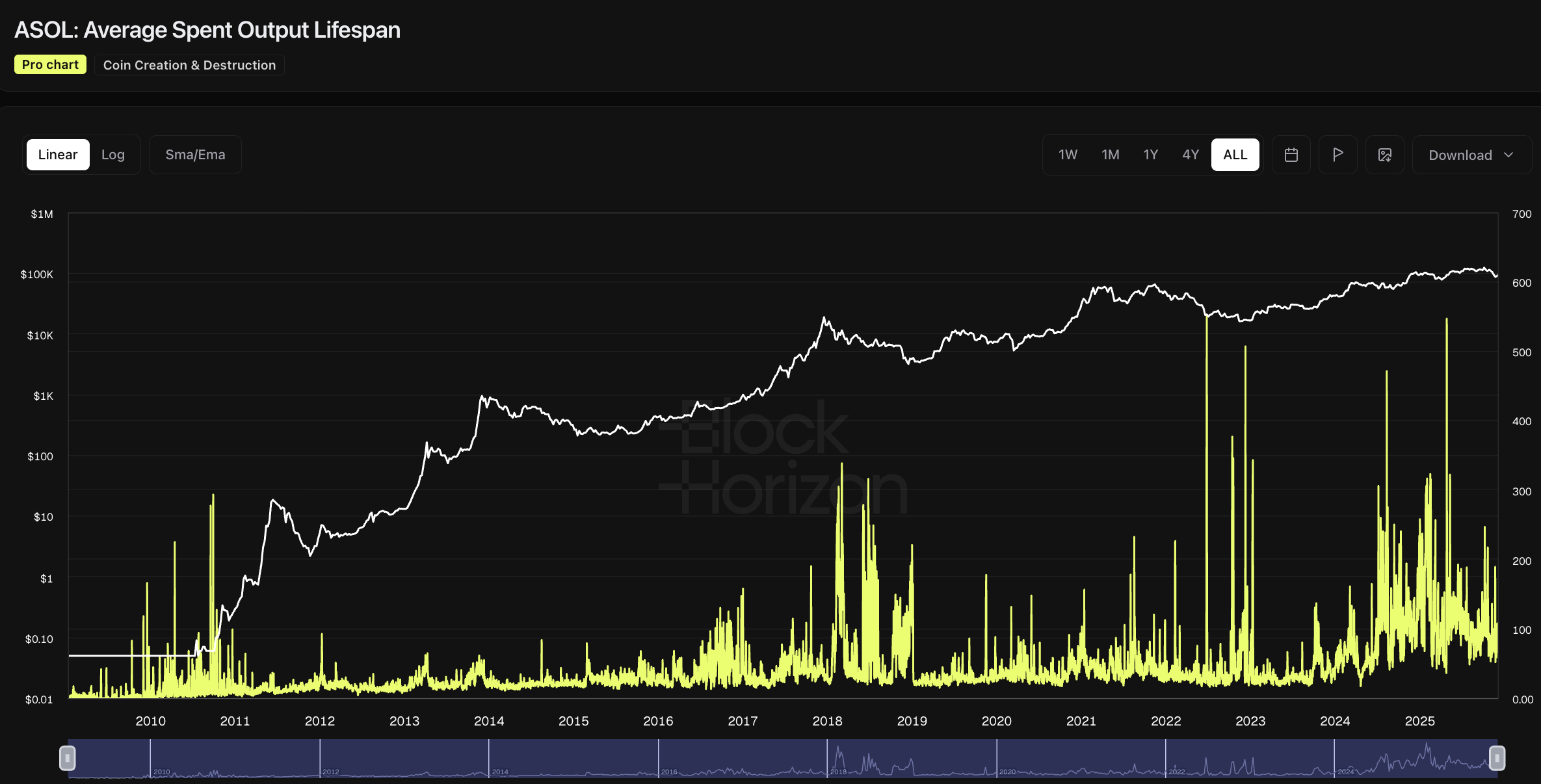
When ASOL rises significantly, older holders are acting with intention.
High ASOL events often signal:
In short: High ASOL = high signal. Older wallets don’t wake up for nothing.
Low ASOL periods tell a different story - one of stability and accumulation.
Persistent low ASOL readings often indicate:
Low ASOL is often one of the earliest signs that the market is regaining its footing.
ASOL has a surprisingly consistent rhythm across Bitcoin’s major cycles:
ASOL isn’t a crystal ball - but history shows its patterns are rarely random.
Professionals use ASOL for:
Used well, ASOL becomes a map of who is shaping the market.
To keep things honest:
ASOL is powerful - but only inside a broader analytical framework.
From seasoned analysts:
Patterns > datapoints.
The average age of all coins spent during a given period.
Long-term holders are spending, likely reacting to major events or taking profits.
Short-term traders dominate activity; long-term holders remain inactive.
Not directly, it reflects behavior, not direction.
Yes. Small amounts of very old coins can raise ASOL significantly.
CDD measures total age destroyed. ASOL measures the average age of spent outputs.
Because old wallets only move during meaningful emotional or strategic shifts.
ASOL isn’t just theory - it’s a direct lens into who’s actually moving the Bitcoin market. If you want to see real ASOL behavior in real time, compare it against other age-based indicators, or study how long-term holders react during volatility, the full ASOL chart is inside the BlockHorizon analytics platform.
Start your free 7-day trial and unlock the full ASOL toolkit - plus every premium Bitcoin metric we offer.